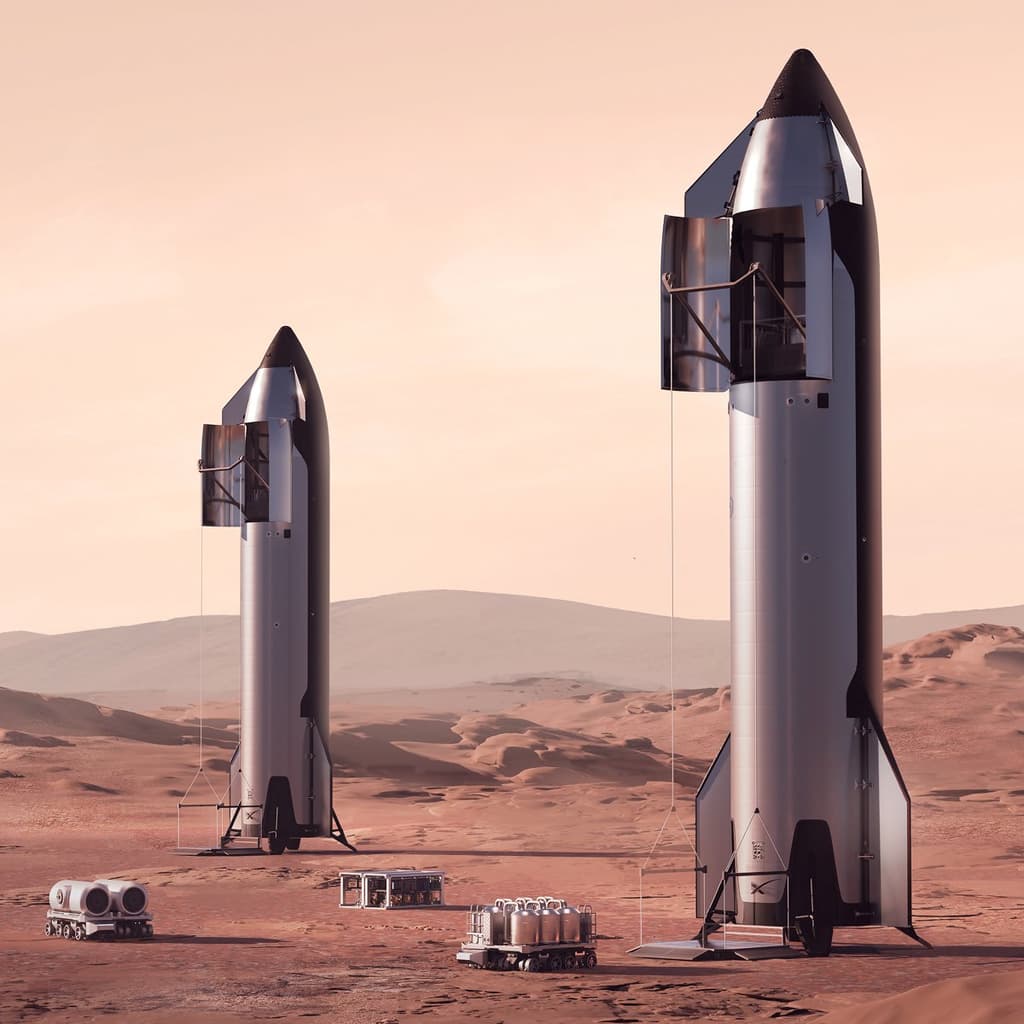
Recent Flight 13 success on July 24, 2026, with Ship 40's soft splashdown, in-space Raptor relight, and first operational Starlink V3 deployment has accelerated trader confidence in rapid progress toward orbital missions. SpaceX plans Flight 14 for low-Earth orbit insertion and Starlink deployment as soon as mid-September, with tower catch attempts eyed shortly after to enable reuse. The key upcoming catalyst remains the NASA-supported orbital refueling demonstration, which requires two Block 3 Starships to rendezvous, dock via automated couplers, and transfer cryogenic propellant—an essential step for Artemis HLS lunar operations that demands precise proximity operations and new hardware qualification. Delays in regulatory approvals or iterative testing could shift timelines, but sustained test cadence supports market-implied odds favoring a 2026 docking window.
Experimental AI-generated summary referencing Polymarket data. This is not trading advice and plays no role in how this market resolves. · Updated$63,846 Vol.
December 31, 2026
8%
December 31, 2027
51%
$63,846 Vol.
December 31, 2026
8%
December 31, 2027
51%
A qualifying docking maneuver must physically join two vessels, matching in velocity, into a connected structure via mating hardware for at least 60 continuous seconds. The two vessels must be in stable Earth orbit with a perigee of at least 100 kilometers above the Earth’s surface.
The docking of any two SpaceX vessels which each serve as an integrated rocket-and-spacecraft and both equal or exceed Starship in scale will qualify regardless of their contents or variant (standard, tanker, depot, HLS, test article, etc.). The two vessels must be free-flying. Any capsule or payload carried to orbit exclusively atop a separate launch vehicle will not qualify. If either vessel is passively placed into the mating interface of the other vessel, that conjunction will not qualify.
The resolution source for this market will be a consensus of credible reporting.
Market Opened: Jun 11, 2026, 1:09 PM ET
Resolver
0x65070BE91...A qualifying docking maneuver must physically join two vessels, matching in velocity, into a connected structure via mating hardware for at least 60 continuous seconds. The two vessels must be in stable Earth orbit with a perigee of at least 100 kilometers above the Earth’s surface.
The docking of any two SpaceX vessels which each serve as an integrated rocket-and-spacecraft and both equal or exceed Starship in scale will qualify regardless of their contents or variant (standard, tanker, depot, HLS, test article, etc.). The two vessels must be free-flying. Any capsule or payload carried to orbit exclusively atop a separate launch vehicle will not qualify. If either vessel is passively placed into the mating interface of the other vessel, that conjunction will not qualify.
The resolution source for this market will be a consensus of credible reporting.
Resolver
0x65070BE91...Recent Flight 13 success on July 24, 2026, with Ship 40's soft splashdown, in-space Raptor relight, and first operational Starlink V3 deployment has accelerated trader confidence in rapid progress toward orbital missions. SpaceX plans Flight 14 for low-Earth orbit insertion and Starlink deployment as soon as mid-September, with tower catch attempts eyed shortly after to enable reuse. The key upcoming catalyst remains the NASA-supported orbital refueling demonstration, which requires two Block 3 Starships to rendezvous, dock via automated couplers, and transfer cryogenic propellant—an essential step for Artemis HLS lunar operations that demands precise proximity operations and new hardware qualification. Delays in regulatory approvals or iterative testing could shift timelines, but sustained test cadence supports market-implied odds favoring a 2026 docking window.
Experimental AI-generated summary referencing Polymarket data. This is not trading advice and plays no role in how this market resolves. · Updated


Beware of external links.
Beware of external links.
Frequently Asked Questions